Home / Specialties
Laser & Energy-Based Treatments
Home / Specialties
Laser & Energy-Based Treatments
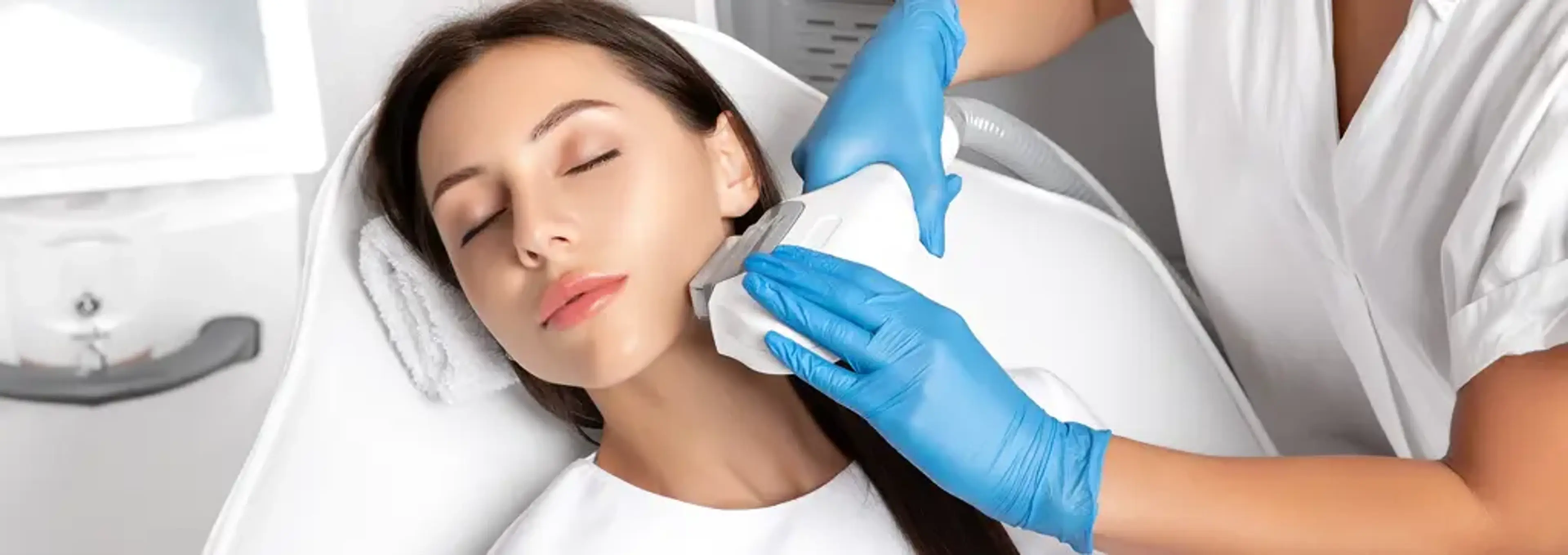
Modern aesthetic medicine has evolved far beyond surface-level treatments. Today, laser and energy-based technologies allow physicians to target pigmentation, acne scars, skin laxity, pores, redness, and collagen loss at controlled depths — without surgery.
Laser and energy-based devices deliver controlled thermal or acoustic energy into targeted layers of the skin.
Depending on the device, treatments can:
Break down pigmentation
Stimulate collagen production
Reduce vascular redness
Tighten lax skin
Improve acne scars
Refine pores
Enhance skin texture
Energy-based treatments require more than advanced devices — they require medical judgment.
Incorrect settings may cause:
Hyperpigmentation
Burns
Barrier damage
Uneven texture
Excess inflammation
Layer-specific targeting
Conservative parameter adjustment
Combination strategy
Gradual remodeling
Preservation of skin barrier
The goal is structural improvement without compromising safety.
UMI Clinic in Jung-gu, Seoul offers a comprehensive portfolio of advanced devices for pigmentation, acne, lifting, and skin refinement.
Pico lasers deliver ultra-short pulses that shatter pigment into microscopic particles.
Melasma improvement
Freckle removal
Acne scar refinement
Pore tightening
Minimal thermal damage
Pico technology reduces risk of post-inflammatory hyperpigmentation, especially important for Asian skin types.
Combines pigment removal and collagen stimulation.
Acne scars
Enlarged pores
Uneven tone
Textural irregularities
Potenza combines microneedling with radiofrequency energy.
Acne scar improvement
Skin tightening
Sebum regulation
Collagen stimulation
Pore refinement
RF energy stimulates fibroblast activity while preserving epidermal safety.
Clarity II addresses:
Redness
Vascular lesions
Pigmentation
Hair removal
Its dual-wavelength system allows flexible treatment customization.
Used for:
Skin tags
Seborrheic keratosis
Flat warts
Milia
Provides precise lesion removal with controlled depth.
A non-ablative laser that:
Improves redness
Refines pores
Stimulates collagen
Enhances skin glow
Suitable for sensitive or maintenance-focused patients.
UMI Clinic integrates:
Ultherapy Prime (HIFU)
Thermage FLX (RF tightening)
Titanium Laser
Onda (Microwave-based tightening)
These devices target deeper structural layers for non-surgical lifting.
Melasma
Hyperpigmentation
Acne scars
Enlarged pores
Skin laxity
Redness (rosacea-like symptoms)
Uneven texture
Early aging signs
Treatment planning depends on depth and severity of concern.
Laser & energy treatments are often combined with:
Injectable skin rejuvenation
Stem Cell & PRP Therapy
Botox
Facial contouring
Advanced skin care
This integrated strategy ensures structural and surface-level harmony.
Energy-based procedures require strict medical oversight.
At UMI Clinic:
Skin type classification is performed
Pigmentation risk is assessed
Conservative settings are applied
Recovery support protocols are provided
Overlapping heat exposure is avoided
Dr. Jong-woo Yoon prioritizes gradual improvement rather than aggressive single-session correction.
Downtime varies by device:
Pico Laser: Minimal redness for 1–2 days
Potenza RF: Mild swelling 2–3 days
CO2 Laser: Longer recovery depending on depth
Ultherapy/Thermage: Minimal downtime
Recovery protocols at UMI Clinic include:
Cooling therapy
Barrier repair support
LED calming treatment
Hydration reinforcement
For patients traveling to Korea, Laser & Energy-Based Treatments offer visible improvement without surgical downtime.
You may benefit from Laser & Energy-Based Treatments if you:
Have pigmentation concerns
Struggle with acne scars
Notice enlarged pores
Experience early skin laxity
Want non-surgical rejuvenation
Prefer gradual improvement
Most skin types can be treated with proper customization.
Yes, when performed with proper settings and physician oversight.
Usually 3–5 sessions depending on condition severity.
Minimal for most non-ablative lasers.
Melasma can be managed but requires maintenance.
They provide moderate lifting but do not replace surgical facelift results.
Yes, combination therapy often improves outcomes.
Mild discomfort may occur; topical anesthesia is used when needed.
With proper parameters, risk is minimized.