Home / Specialties
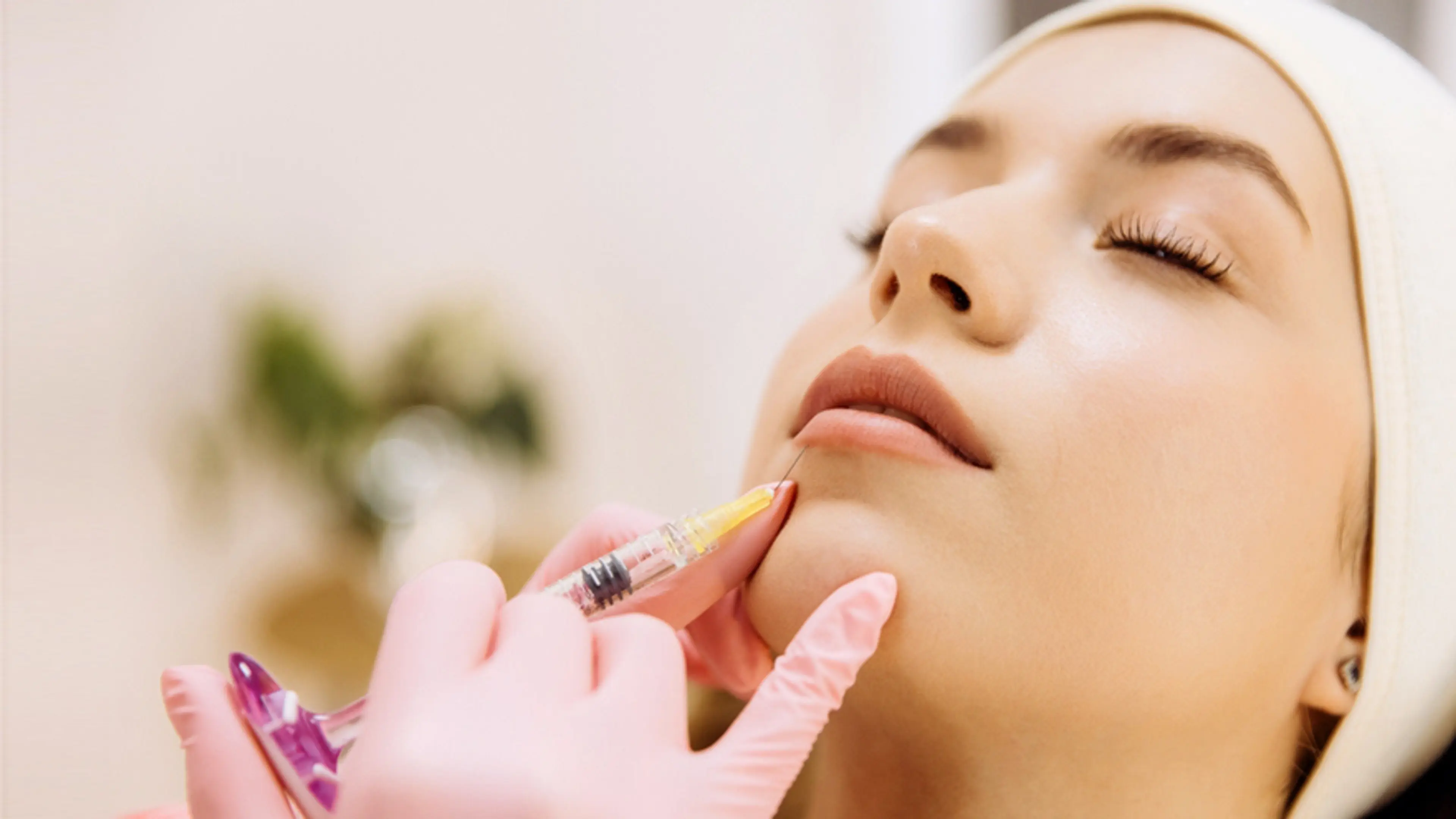
Botox & Muscle Balance
Home / Specialties
Botox & Muscle Balance
Wrinkles are not created by aging alone. Many facial lines are formed by repeated muscle movement — frowning, squinting, clenching, or raising the forehead. Over time, these dynamic expressions leave permanent creases in the skin.
Facial muscles function like hinges that allow movement. When certain muscles contract repeatedly with excessive force, they create:
Forehead lines
Glabellar (frown) lines
Crow’s feet
Chin dimpling
Downturned mouth corners
Jaw widening from masseter hypertrophy
Trapezius tension affecting neck contour
Overactive muscles can also disturb facial proportion, making one side appear heavier or more dominant.
Many patients fear looking “frozen” after Botox. This typically happens when:
Excess dosage is used
Muscle balance is not considered
Injection depth is incorrect
Only wrinkle depth is treated without analyzing movement
Functional muscle evaluation
Conservative dosing
Layer-specific injection
Proportion preservation
Natural expression retention
The goal is not to remove movement, but to reduce excessive force.
Botox works by temporarily blocking neuromuscular signals, relaxing targeted muscles.
However, facial muscles function in opposing groups. If one muscle is weakened excessively without considering its counterpart, imbalance may occur.
Reduce dominant muscle tension
Support symmetrical movement
Prevent overcompensation
Maintain natural dynamics
This is referred to as Muscle Balance Botox.
UMI Clinic provides customized Botox & Muscle Balance treatments for various facial and body areas.
Overuse of the frontalis muscle creates horizontal forehead wrinkles.
Dr. Jong-woo Yoon carefully adjusts dosage to:
Preserve brow position
Avoid heavy eyelids
Maintain natural movement
Strong contraction of the corrugator and procerus muscles forms vertical frown lines.
Balanced injection prevents:
Over-lifted brows
Asymmetrical relaxation
Artificial stiffness
Botox softens lateral eye wrinkles without altering natural smiling dynamics.
Overdeveloped masseter muscles can widen the lower face.
Masseter Botox at UMI Clinic:
Reduces jaw width
Softens square jaw
Maintains chewing function
Improves facial proportion
Used to address:
Chin dimpling
Downturned mouth corners
Asymmetric lower lip movement
Excess trapezius tension can affect:
Neck contour
Shoulder line
Overall upper body proportion
UMI Clinic in Jung-gu, Seoul offers multiple toxin brands:
Allergan (Original Botox)
Dysport
Xeomin
Nabota
Coretox
Botulax
Bienox
Dr. Jong-woo Yoon selects the toxin based on:
Patient sensitivity
Resistance history
Area treated
Desired diffusion pattern
Botox treatment is not simply about reducing wrinkles — it is about designing how the face moves.
This approach allows for:
Precise control of muscle tension
Preservation of natural facial expression
Balanced upper and lower face movement
Prevention of asymmetry
Avoidance of heavy or stiff appearance
Every face has a unique pattern of muscle strength and dominance. Some patients overuse the forehead, while others rely heavily on the glabellar muscles or masseter muscles. By understanding these individual movement patterns, Dr. Jong-woo Yoon adjusts dosage, depth, and placement accordingly.
At UMI Clinic, Botox is not standardized. It is designed.
Botox is not only corrective. Preventive Botox can:
Slow wrinkle formation
Reduce habitual muscle strain
Maintain smoother skin
Preserve collagen integrity
Younger patients in their late 20s and 30s often benefit from conservative muscle modulation.
Botox & Muscle Balance treatments are often combined with:
Dermal fillers (for volume support)
Lifting treatments (Ultherapy, Thermage)
Skin rejuvenation injections
Facial contouring
This ensures that muscle relaxation complements structural balance.
Botox injections require anatomical precision.
At UMI Clinic:
Safe injection zones are strictly followed
Vascular structures are respected
Dosage is conservative
Symmetry is continuously monitored
Overcorrection is avoided
The clinic’s VIP consultation system ensures individualized care rather than high-volume standardized treatment.
Botox treatments involve minimal downtime.
Patients may experience:
Mild redness
Small injection marks
Temporary tenderness
Effects typically begin within 3–7 days and last:
3–6 months depending on area
Longer with consistent maintenance
For patients traveling to Korea for aesthetic treatments, Muscle Balance Botox offers visible refinement without major recovery.
No. At UMI Clinic, conservative dosing preserves natural expression.
Typically 3–6 months depending on area and metabolism.
Discomfort is minimal and brief.
Yes, masseter Botox can reduce jaw width gradually.
When performed by experienced physicians like Dr. Jong-woo Yoon, Botox is safe.
Results begin within 3–7 days.
Yes. Preventive Botox reduces repetitive muscle strain.
Yes. Combination treatment often enhances balance.